Beyond the City Dealers: The Quiet Case for Buying Design at Provincial Auctions
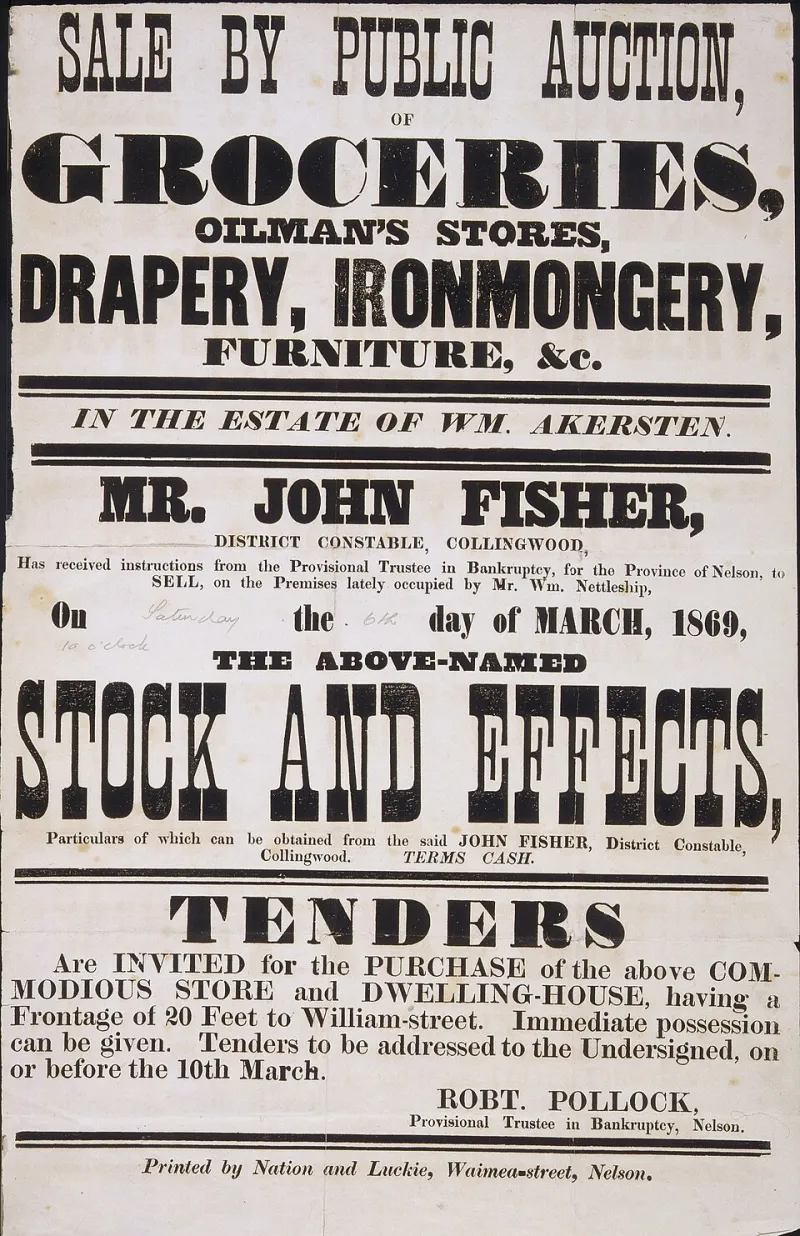
Photo: National Library NZ on The Commons, No restrictions, via Wikimedia Commons
There is a particular quiet in a regional saleroom on a viewing morning. Strip lights, a radio muttering somewhere out the back, the smell of old upholstery and beeswax. You are holding a 1960s rosewood sideboard upside down, hunting for a stencil, while a porter explains that it came out of a bungalow on the edge of town and the family had it from new. Reproducing that on a Saturday afternoon in a city showroom is, to put it mildly, a stretch.
The trade's least-discussed habit
Here's the thing the metropolitan dealers would rather you didn't dwell on: a fair number of the pieces in their windows were bought at a provincial auction four weeks earlier. Regional rooms are where the trade shops. The uplift they add isn't greed — it's rent, restoration, storage and the genuine risk of buying blind from a photograph. Cut that layer out and the margin stays with you, provided you're willing to do some homework and get your hands dirty.
Value isn't only financial, either. A provincial catalogue will throw up things no curated city shop would bother to stock: a boxed collection of 1970s studio pottery, a pair of Danish lamps with one shade missing, a textile archive from a closed mill. Some of it is dross. Occasionally it is the thing you'll still be talking about in five years.
Reading a catalogue without being taken in
Estimates are advertising, not valuation. A £150–£250 estimate on a desirable lot is designed to pull bidders into the room; an £800–£1,200 estimate on something unglamorous often means the auctioneer genuinely doesn't know. Neither number tells you what a thing is worth to you.
- Ask for a condition report in writing. Request it five working days before the sale, not the night before. Good rooms photograph chips, cracks and repairs; quiet ones tell you it's "fine for age", which means nothing.
- Learn the code. "As found", "a/f", "sold with all faults", "requires attention" and "not examined out of frame" are all doing heavy lifting. Treat them as an invitation to assume the worst.
- Follow the provenance line. "By descent from the family" or "purchased by the vendor in 1974" is worth an email. Auctioneers will usually tell you more than the catalogue does if you ask politely.
- Check the illustrations. Lots marked "illustrated" get a photo; plenty don't. Ask for extra images of the base, the joints and the maker's mark.
- Watch for withdrawals. Lots vanish when a private sale happens beforehand. Never book a train around one lot alone.
The arithmetic nobody puts on the wall
The hammer price is the beginning, not the end. Buyer's premium at most regional rooms sits somewhere between 22% and 28% plus VAT on the premium itself. Bid live online and the platform will usually add a further 3%–6% plus VAT. Some lots carry VAT on the hammer as well, flagged by a symbol in the catalogue that everybody ignores until the invoice arrives.
A worked example, roughly: a £400 hammer with a 24% premium means £96, plus £19.20 VAT on that premium, plus roughly £24 in online surcharges. You're at around £540 before you've hired a van. Budget for it at the bidding stage, or you'll spend the drive home doing sums in your head.
Getting it home without a second mortgage
Most rooms give you seven to ten days of free storage before charging by the day, and collection windows are often weekday-only. Fine art couriers are excellent and priced accordingly; general couriers will happily destroy a ceramic for you. For anything fragile, professional packing can cost as much as the lot did. Measure the door of your flat before you bid, not after.
Rooms worth a winter train ride
- Penzance — David Lay. Take the Night Riviera sleeper from Paddington, arrive with the light coming up over the bay, view in the morning. Cornish art and good provincial furniture.
- Leyburn, North Yorkshire — Tennants. Change at Northallerton and watch the Dales go white out of the window. Big, well-run specialist sales across jewellery, silver and northern art.
- Cockermouth, Cumbria — Mitchells. Up via Carlisle; a proper Lakeland saleroom where the contents sales are as interesting as the headline lots.
- Salisbury — Woolley & Wallis. Waterloo to Salisbury, then a short walk. Strong on ceramics and Asian art.
- Aylsham, Norfolk — Keys. Via Norwich. Country house contents and a satisfyingly old-fashioned viewing day.
- Shrewsbury — Halls. A handsome town for a wander between lots, with regular fine art and antique sales.
- Stourbridge — Fieldings. The one to watch if you collect glass, given the town's own history.
Winter calendars lean towards jewellery, silver, glass, clocks and house contents, and viewing is usually the two days before the sale. Dates shift, so check each room's own calendar rather than trusting a roundup — including this one.
A short etiquette guide
Register for a paddle before you bid, don't ring up asking for a "best price" on something still on view, and never scratch your nose during a bidding war. Pay within the terms, be pleasant to the porters, and remember that the person carrying your sideboard out to the car has more influence over whether it survives the journey than anyone else in the building.
Go once out of curiosity. You'll come back with something small, then something ridiculous, and then something you'd genuinely never have found in a city.