The Longhand League: Britain’s Stationery Shops Are Hosting Winter Letter Nights
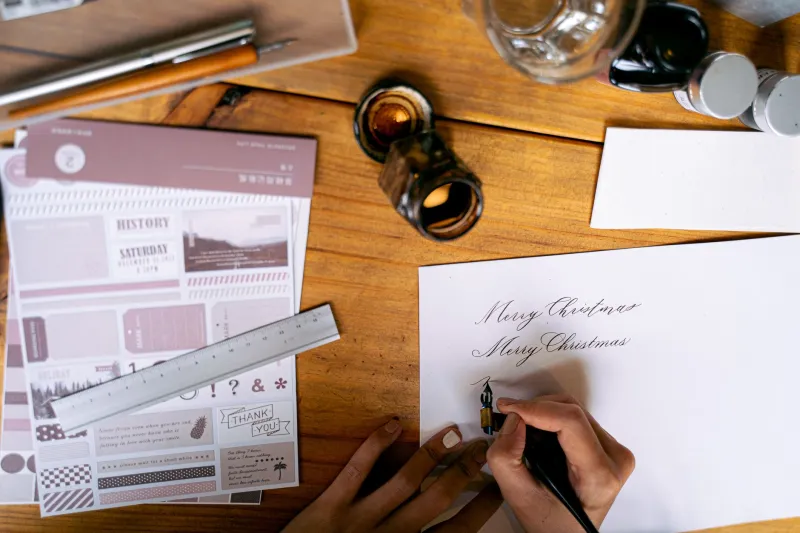
There is a particular kind of winter evening that begins with the smell of gummed envelopes and ends with a short walk to the nearest pillar box. Across Britain, independent stationers, paper shops and pen counters are leaning into that pleasure by hosting letter-writing nights: gentle, bookable sessions where the point is not to produce a perfect piece of calligraphy but to sit down, choose some paper, and write to someone properly.
The format is not a workshop in the strict sense. You are unlikely to spend two hours being corrected on your descenders. Instead, these nights borrow the atmosphere of a parlour social — lamps on, shop door locked, a few tables cleared, perhaps a pot of tea — and give everyone a simple task. Write one letter. Address it. Post it before you go home. In a season of crowded diaries and bright screens, that counts as an event.
Why letter-writing has become a night out
The appeal is partly tactile. Good paper has weight. A fountain pen has a slight drag. Sealing wax, even the modern peel-and-stick sort, makes a small ceremony of closing an envelope. But the social side matters too. These evenings are low-stakes by design: you can arrive alone, you do not have to perform, and the conversation tends to arrive sideways, while everyone is looking at their own page.
They also suit the way independent shops already work. A stationer has paper to sell, inks to test and a back room that is often underused after 6pm. Turning that space into a monthly letter night gives regulars a reason to return and gives newcomers a way in that is less daunting than browsing a wall of nibs alone. Some shops charge a small ticket, often redeemable against paper or ink; others ask only that you buy your materials there. Either way, it is a fair exchange: atmosphere, a table and a deadline.
How the evenings actually run
No two shops run identically, but the shape is usually similar. You book ahead — rooms are small, and a letter-writing table for twenty is not the same as a browsing shop for twenty. On arrival, there is often a short welcome and a prompt: write to an old friend, write to your future self, write a complaint you will never send, write a thank-you note. The prompts are there to stop the blank-page panic, not to set homework.
Then comes the good part: choosing paper. Many shops lay out a few sheets from their own stock, from airmail-weight sheets to thicker laid paper, and encourage you to try a dip pen or test an ink colour at a dedicated tray. If you have brought your own pen, fill it before you arrive or ask first; some inks and older pens do not mix happily. A shop assistant will usually be on hand for the practical questions — which envelope takes which address format, whether the ink is waterproof, how many stamps a heavy card needs.
The writing itself is not silent. It is a gentle hum: chairs shifting, nibs scratching, the occasional laugh as someone realises they have written the wrong name on the envelope. Some nights include a short break for tea; others end with a guided postbox run to catch the last collection. That walk is half the charm. You leave the shop with a letter in hand, cross the road to the pillar box, and post it while the ink is still fresh. Then, if you are sensible, you repair to a nearby pub for a drink you have arguably earned.
What to bring, and what to leave at home
Bring addresses. This sounds obvious, but a surprising number of people arrive with a lovely sheet of paper and no idea where anyone lives. A small notebook or a phone note with a few postcodes is enough. Bring stamps if you have them, especially if you are posting abroad; the shop may sell them, but not every independent has a full stock. Bring a fountain pen if you own one and know it behaves, plus a spare cartridge if it takes one.
Leave the laptop at home. A tablet is fine for checking an address, but the point of the night is to be away from the feed for an hour. Avoid glitter, strong perfume and anything that sheds; you are in a small room with other people’s paper. And do not bring a full calligraphy kit unless the shop has specifically asked for one. These nights are about correspondence, not competition.
Shops worth booking for paper, pens and parlour atmosphere
A few independent names are worth bookmarking as you look for listings. Choosing Keeping in London is a paper lover’s cabinet of curiosities, with shelves that reward a slow browse and a serious selection of writing paper. Present & Correct, also in London, has the graphic, design-led end of stationery covered, and both shops suit the intimate, after-hours feel these nights depend on. The Writing Desk in Bury St Edmunds is a destination for pens and inks, the sort of place where a beginner can ask a basic question without feeling foolish. Fred Aldous in Manchester is a long-standing craft and art-supplies favourite with the kind of tables and tools that make a making session feel natural. In Edinburgh, Analogue Books is the sort of design-minded shop where paper, print and a good notebook sit comfortably together.
Not every one of these runs a monthly letter night, and that is the point: check the events pages, sign up to the newsletters, and ask at the counter. The best sessions are often announced quietly and fill quickly. Look for shops that mention an ink-testing table, a postbox run or a ticket price that can be spent on paper. Those are the signs of a shop that has thought about the evening rather than simply cleared a table.
The postbox run is the point
A letter written at a table is a nice idea. A letter posted is a small event in someone else’s day. The guided walk to the postbox gives the evening a proper ending and solves the modern problem of the letter that lives in a bag for a fortnight. Check the collection time before you go — last post varies, and a Sunday box is a different proposition from a weekday one. If you are posting abroad, ask about the correct rate rather than guessing.
Then walk back a different way. Buy a bag of chips, if the mood takes you. The letter is gone, the table is cleared, and you have spent an evening doing something that felt suspiciously like slowing down. In 2026, that is a rare enough thing to book ahead for.