Pass the Meeple: The Sunday Board-Game Cafés Where Nobody’s Rushing the Score
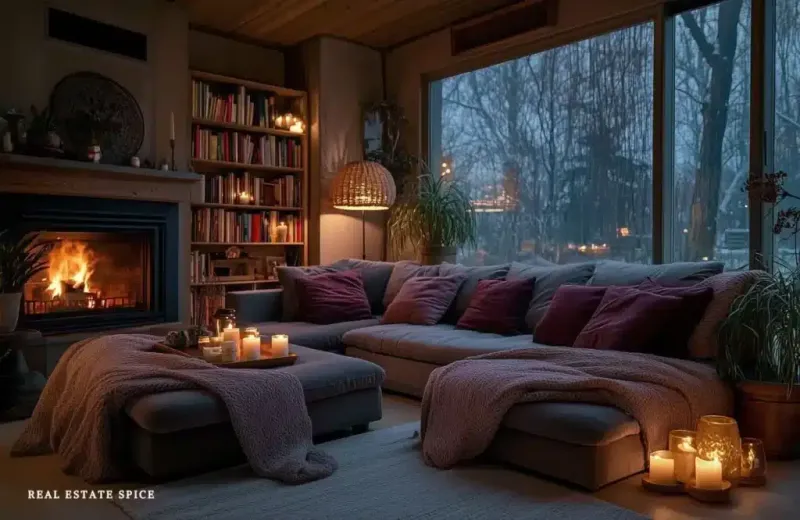
Photo: cozy UK board game cafe interior people playing tabletop games winter afternoon, via realestatespice.com
Sunday afternoons in Britain have a rhythm of their own. In November, that rhythm tends to involve rain on the window, a second pot of tea and the vague sense that the weekend is already packing up. Which is exactly why the board-game café has become such a useful winter refuge. Not for a frantic all-day session, but for something gentler: a low-stakes tournament, a table that stays put, and a room full of people who are happy to explain the rules one more time.
The contest that isn’t really a contest
Call it a tournament if you like. The best Sunday events at independent board-game cafés are only loosely competitive. There may be a score sheet. There may even be a small prize. But the atmosphere is closer to a long lunch than a league night. Staff act as referees, tutors and gentle nudges. If you misread a card, someone will point it out without making a thing of it. If you win, you might get a packet of biscuits or the right to choose the next game. The point is shared attention, not a podium.
Why analogue sociability is having a moment
Screen fatigue is real, but the appeal is not simply about escaping screens. It is about being in a room with other people, doing one thing together. A board game gives a table a shape. It gives strangers something to talk about that is not the weather or work. And because the café is a public room with a licence to linger, it offers the sort of easy company that a pub can struggle to provide on a Sunday afternoon. You can arrive alone, join a table, learn something, and leave without anyone expecting a big night out.
Board-game cafés have been quietly multiplying in UK cities since the early 2010s, and the Sunday slow tournament is the latest refinement. It is a natural fit for a winter season when people want an excuse to leave the house without committing to a full evening. The format is simple: a scheduled afternoon, a stack of approachable games, and staff on hand to make sure nobody spends forty minutes arguing about turn order.
Where the Sunday habit is taking hold
From Bristol to Leeds, the independent board-game café is now a fixture in many city centres. Bristol’s Chance & Counters, Oxford’s Thirsty Meeples, Nottingham’s Dice Cup, Sheffield’s Treehouse and Norwich’s The Games Table are among the places that have made the format work. In Leeds, Manchester and Glasgow, smaller venues run similar afternoons with a more local feel. The exact programme changes month to month, so check the calendar rather than assume. Some cafés run beginner-friendly sessions; others lean towards themed tables or longer strategy games. A few ask you to arrive as a group; many will happily seat you with others.
How a slow tournament actually works
Most venues ask you to book a table for a set window, often two to four hours. You do not need to bring a game. The library does the heavy lifting: gateway favourites, modern classics, odd little card games and the occasional sprawling epic that nobody should start at 4pm. Staff will teach the rules, which is the real service. Arrive with a rough idea of how much time you have and how much thinking you want to do. If you are new, say so. The best hosts will steer you towards something with a ten-minute explanation and a forty-minute play time.
A typical afternoon might start with a short, noisy warm-up game, then settle into something longer. There is no shame in bowing out after one round. The cafés that run these events well build in breaks, keep the tables close enough for chat but far enough apart for concentration, and make sure the person teaching the rules is not also trying to run the coffee machine.
The table manners that make it work
Sunday tournaments run on unspoken etiquette. Do not rules-lawyer a stranger. Do not take a fifteen-minute turn while everyone else watches. Do not treat the staff as a search engine for every rule query if the answer is on the card in front of you. Do ask questions. Do offer to fetch drinks. Do accept that a game might be lost on a lucky draw. The cafés that do this well make the social contract clear without making it heavy.
What to order and what to bring
Order something. The business model is food and drink, not just table space. Coffee, cake, toasties and a long lunch are all part of the deal. Bring glasses if you need them, a layer for the walk home, and patience for the person learning a game for the first time. Leave the headphones at home. You can bring your own game if you have a favourite, but check first: some venues prefer you to use their library, especially during scheduled events.
The practical bit
Book ahead for Sundays, particularly in the run-up to Christmas. Afternoon slots fill faster than evening ones. Check the age policy if you are bringing younger players, and check accessibility before you travel: old buildings and step-free access are not always friends. Budget for a table fee plus drinks and food. And if you are travelling by train, choose a venue within walking distance of the station; a slow tournament is much better when the journey home is not a scramble.
The pleasure of an unfinished afternoon
The best Sunday tournament ends without a clear winner. Someone is still explaining a rule. Someone else is finishing a cold coffee. The score sheet has been abandoned under a napkin. You leave with a new game you want to try again and a vague plan to come back next month. That is the real prize: an afternoon that felt longer than the week deserved, spent in good company and on a single table.